
A decicious starter inspired by Frédy Girardet 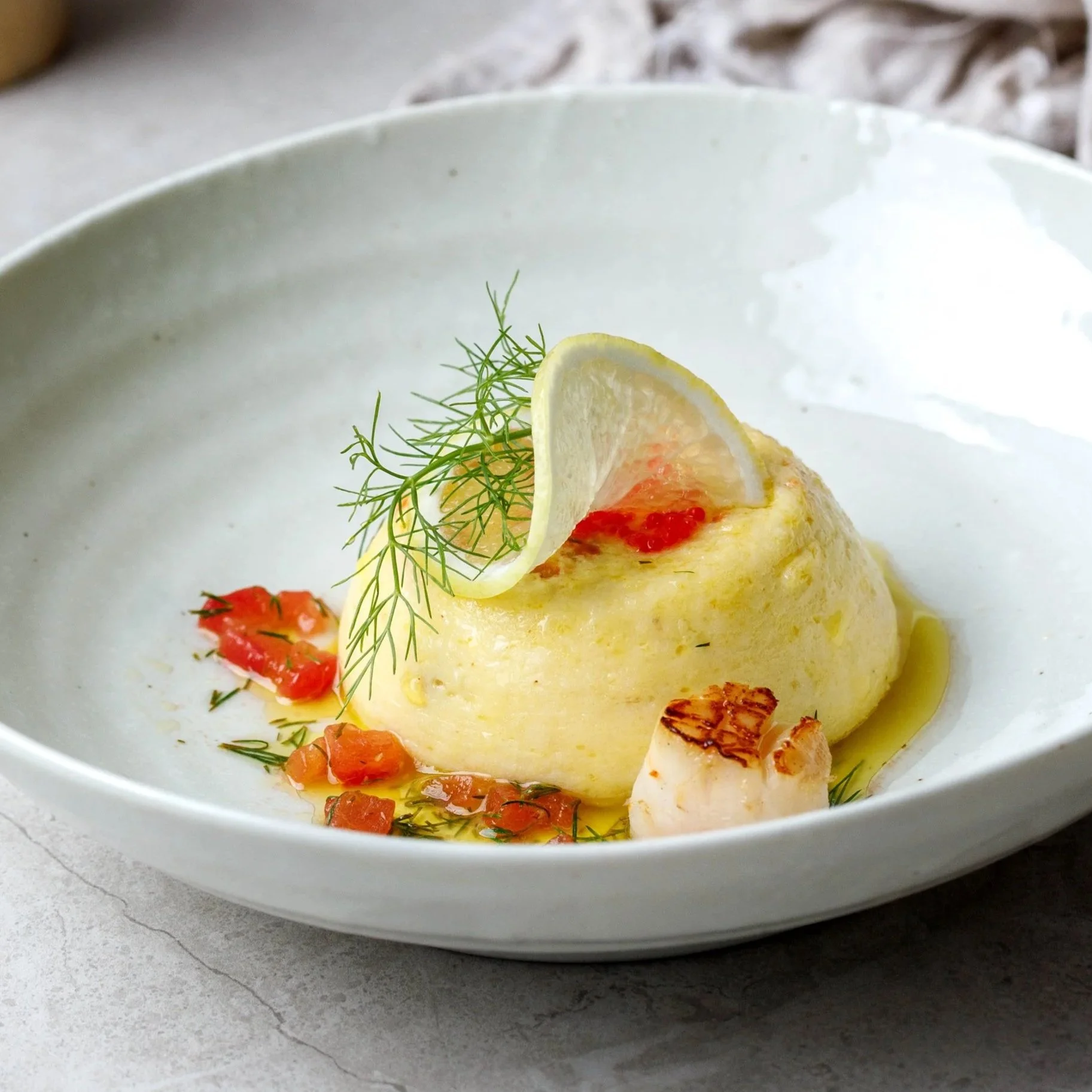
Frédy Girardet was one of the great chefs of the twentieth century, and his cooking in Crissier was all about precision and lightness. This little royale is my nod to that style. Raw scallops are blended with egg and cream into a silky mousseline, then poached gently in a water bath until just set, with a little surprise of diced scallop roe hidden in the centre. On the plate, a warm citronnette of lemon, tomato and dill cuts through the richness. It looks like restaurant food, but the real work is done well before your guests arrive, which makes it a perfect holiday starter. The one rule here is temperature. Keep everything cold while you blend and the mousseline will hold together beautifully.
Serves 4 to 5 as a starter
Preparation: 30 min, plus chilling
Cooking: 15 to 20 min
INGREDIENTS
For the Scallop Royale
Softened unsalted butter, for greasing the moulds and parchment
150 g (5 oz) fresh scallops, roe on if available
Fine salt
30 g (1 oz) beaten whole egg (about half a large egg)
Pinch of ground white pepper
Pinch of cayenne pepper
½ tsp (2.5 ml) cognac
½ tsp (2.5 ml) dry white vermouth, such as Noilly Prat, or white port
200 ml (7 fl oz) heavy cream (35% fat or more), well chilled
For the Warm Citronnette
1 tbsp (15 ml) fresh lemon juice
Salt and freshly ground black pepper
3 tbsp (45 ml) extra virgin olive oil
3 tbsp (45 g) tomato concassée (peeled, seeded and finely diced), about 1 small tomato
1 tbsp (3 g) finely chopped fresh dill
To Garnish (optional)
Sturgeon caviar or lumpfish roe
Fresh dill sprigs or fennel fronds
A few lemon suprêmes
MISE EN PLACE
You will need a small food processor, 4 to 5 non-stick pudding moulds of 80 to 100 ml (2¾ to 3½ fl oz), a deep baking dish for the bain-marie and a sheet of parchment paper cut to cover the moulds. Shallow non-stick moulds release far more reliably than tall, narrow metal darioles, so use them if you have the choice.
Put the food processor bowl and blade in the freezer for at least 15 minutes. Keep the scallops, egg and cream in the fridge until the moment you need them.
Brush the moulds generously with softened butter, chill them for a few minutes, then brush them a second time. Butter one side of the parchment.
Pull away the small, tough side muscle from each scallop and discard it. If the roe is attached, separate it from the white meat.
Bring a small saucepan of lightly salted water to a gentle simmer. Poach the roe for 5 minutes, then drain, refresh under cold water and chill in the fridge. Once cold, cut it into small dice.
METHOD
Preheat the oven to 170°C (340°F) fan-forced, or 190°C (375°F) conventional, and boil the kettle for the water bath.
To make the mousseline, place the scallop meat in the chilled processor bowl with a good pinch of fine salt. Blend until completely smooth with no pieces remaining. The salt is not only there for seasoning. It helps the scallop proteins bind, and that is what gives the royale its structure. Add the beaten egg and blend again until silky, then add the white pepper, cayenne, cognac and vermouth.
With the motor running, pour in the cold cream in a slow, steady stream. Stop as soon as it is smooth, because overworking warms the mixture and can make the cream split. Scrape down the sides and give it one last short pulse. For an even finer texture, push the mixture through a fine sieve into a bowl set over ice.
To check the seasoning, poach a teaspoon of the mixture in simmering water for a minute or two and taste it. Raw mousseline does not taste like the cooked version, and with raw egg and seafood in it you should not taste it raw anyway. Adjust the salt, vermouth or cayenne as needed.
To fill the moulds, spoon a layer of mousseline into the bottom of each one. Scatter a little diced roe (or a small spoonful of caviar) in the centre, then cover with more mousseline until each mould is three-quarters full. Tap each mould gently on the bench to release any air pockets and smooth the tops.
Place the moulds in the baking dish and pour boiling water around them until it comes three-quarters of the way up their sides. Cover with the buttered parchment, butter side down, and bake for 15 to 20 minutes. The royales are ready when the tops feel springy and firm and are just starting to pull away from the sides. There should be no colour at all.
While the royales are in the oven, make the citronnette. In a small saucepan, whisk the lemon juice with a pinch of salt and pepper, then whisk in the olive oil and add the tomato. Just before serving, warm it over low heat. You want it warm, not hot. Take it off the heat and stir in the dill at the last moment so it keeps its colour and fragrance. If the dressing separates, that is normal for a warm citronnette. Give it a quick whisk before spooning.
Lift the moulds out of the water bath and let them rest for 2 minutes. Run a thin knife around the edge of each one, then turn out onto the centre of a warm plate. Spoon the citronnette around the royale. Finish with a small quenelle of caviar on top, a sprig of dill or fennel and a few lemon suprêmes, then serve straight away.
Cooking Notes
You can fill the moulds a few hours ahead, cover them and keep them in the fridge. When you are ready, pour the boiling water into the dish and bake. Because the moulds go in cold, allow an extra 3 to 5 minutes and check by touch.