
By Taillevent, a master cook to the kings of France in the fourteenth century. 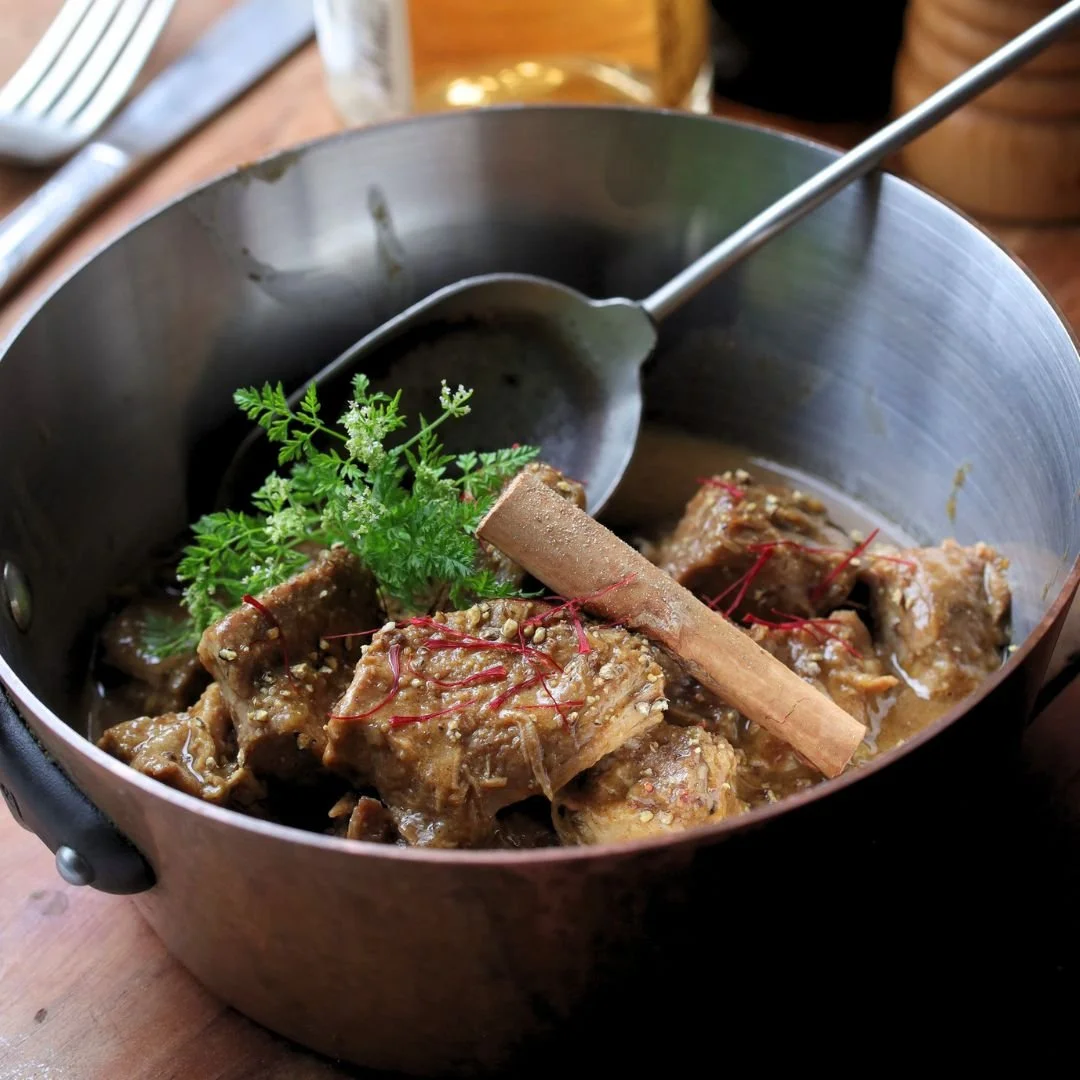
Long before Escoffier, and long before La Varenne, there was Le Viandier. It is one of the oldest French cookbooks we know of, and it carries the name of Guillaume Tirel, better known as Taillevent, master cook to the kings of France in the fourteenth century. When I opened it, I expected curiosities. What I found was a cook who knew exactly what he was doing.
This civet de porc is my reading of one of his recipes. The structure will feel familiar: the meat is browned first, onions are cooked slowly in fat, a liquid goes in and everything braises gently. What makes it medieval is the detail. The meat is roasted rather than seared, the sauce is thickened with dark toasted bread instead of flour, and the spices only arrive at the end, and in quantities you would never use today. Cinnamon, ginger, saffron and long pepper, sharpened with verjuice and vinegar. At a time when pepper was worth almost its weight in gold, this was food for kings and bishops, not for the rest of us.
I will be honest, I did not know what to expect. The result surprised me. The acidity lifts the pork, which can be a bit flat on its own, the cinnamon sits warmly in the background, and the whole dish tastes remarkably like a carbonade flamande. It is as if I had found its great-great-grandfather. Six hundred years old, and something you would happily cook for friends today. Medieval food was never just brown slop on a plate.
SERVES 4
INGREDIENTS
1 kg (2 lb 3 oz) pork shoulder (pork scotch), in one piece
Salt to season
100 g (3½ oz) day-old bread, about 3 slices
300 ml (10 fl oz) red wine
200 ml (7 fl oz) pork or chicken broth, plus about 500 ml (17 fl oz) to cover
½ tbsp (7 ml) cooking oil
50 g (1¾ oz) pork fat, diced, or 1 tbsp (15 g) lard
2 large onions, finely sliced, about 400 g (14 oz)
2 tsp crushed long pepper
1 generous pinch of saffron threads
2 tbsp (30 ml) verjuice
1 tbsp (15 ml) aged red wine vinegar, plus extra to taste
2 tsp ground cinnamon
1 tsp ground ginger
MISE EN PLACE
You will need a roasting dish, a heavy ovenproof casserole or cast-iron pot with a lid, and a coarse-mesh sieve.
Preheat the oven to 240°C (465°F) on a roasting setting, or the highest grill-and-fan setting your oven has.
Toast the bread until it is properly dark, well beyond what you would want for breakfast. The colour of the toast gives the sauce its colour and a roasted, slightly bitter depth.
Finely chop the saffron threads with a knife.
METHOD
Season the pork all over with salt and place it in the roasting dish. Roast for 10 to 15 minutes, just long enough to sear and crust the outside. You are not cooking the meat through here. In Taillevent’s time, the meat would have been partly roasted on a spit before going into the pot, and this is our domestic oven version of that searing step.
While the pork roasts, place the toasted bread in a bowl with the wine and the 200 ml (7 fl oz) of broth and leave it to soak for 20 to 30 minutes. If the bread drinks up all the liquid, add a little more broth.
Once ready, remove the pork from the oven, set it aside to cool and keep any juices from the dish. Lower the oven to 160°C (320°F).
Next, heat the oil in the casserole dish or pot over medium-high heat and add the pork fat or lard. Let it render for a few minutes, then add the onions and lower the heat to medium. Cook for at least 12 minutes, stirring from time to time, until soft and lightly golden. Take your time here, the onions carry much of the flavour of the finished dish.
Meanwhile, crush the soaked bread into a pulp with a fork or a whisk, then push it through the coarse-mesh sieve. Press firmly so as much of the bread as possible passes through, and discard what remains in the sieve. This is your thickening agent, the liaison, and it replaces the flour you would use in a modern stew.
Cut the cooled pork into 3 to 4 cm (1¼ to 1½ in) cubes and add them to the onions with the reserved roasting juices. Stir well, then add half the crushed long pepper. Pour in the bread mixture, then add enough broth to just cover the meat. Bring to a gentle simmer, cover with the lid and transfer to the oven. Braise for 1½ to 2 hours, until the pork is tender.
When the stew comes out of the oven, the sauce should coat the back of a spoon. Taste it. At this point it tastes like a good, honest French ragoût. The spices are what will turn it into something else entirely.
In a small bowl, combine the saffron, verjuice and vinegar, then add 1 teaspoon of the cinnamon and half of the ginger. Add a ladle of the hot sauce from the stew and keep stirring until everything is diluted. Stir the mixture into the stew, then add the rest of the crushed long pepper.
Return the casserole to a low heat and taste again. Add the remaining ginger, more cinnamon and a little more vinegar until the sauce is boldly spiced, with a clear sweet and sour edge. Reheat gently for a few minutes and serve with plenty of bread, the staple of every medieval table.
Cooking Notes
If you want to save time like me, put the whole bread mixture in a blender, blitz for 10 seconds, then pass it through the sieve. It makes the job much quicker, but you will end up with plenty of foam that you need to skim off and discard.
Verjuice is the pressed juice of unripe grapes. It was everywhere in medieval cooking and gives a softer, fruitier acidity than vinegar. Look for it in delicatessens or Middle Eastern grocers.
Long pepper is less sharp than black pepper and has warm notes close to cinnamon and nutmeg. If you cannot find it, use black pepper with a small pinch of grated nutmeg.
This stew is even better reheated the next day, once the spices have had time to settle into the sauce.