
CLASSIC POTATO SALAD WITH WHITE WINE
Escoffier's technique for an excellent potato salad - white wine. 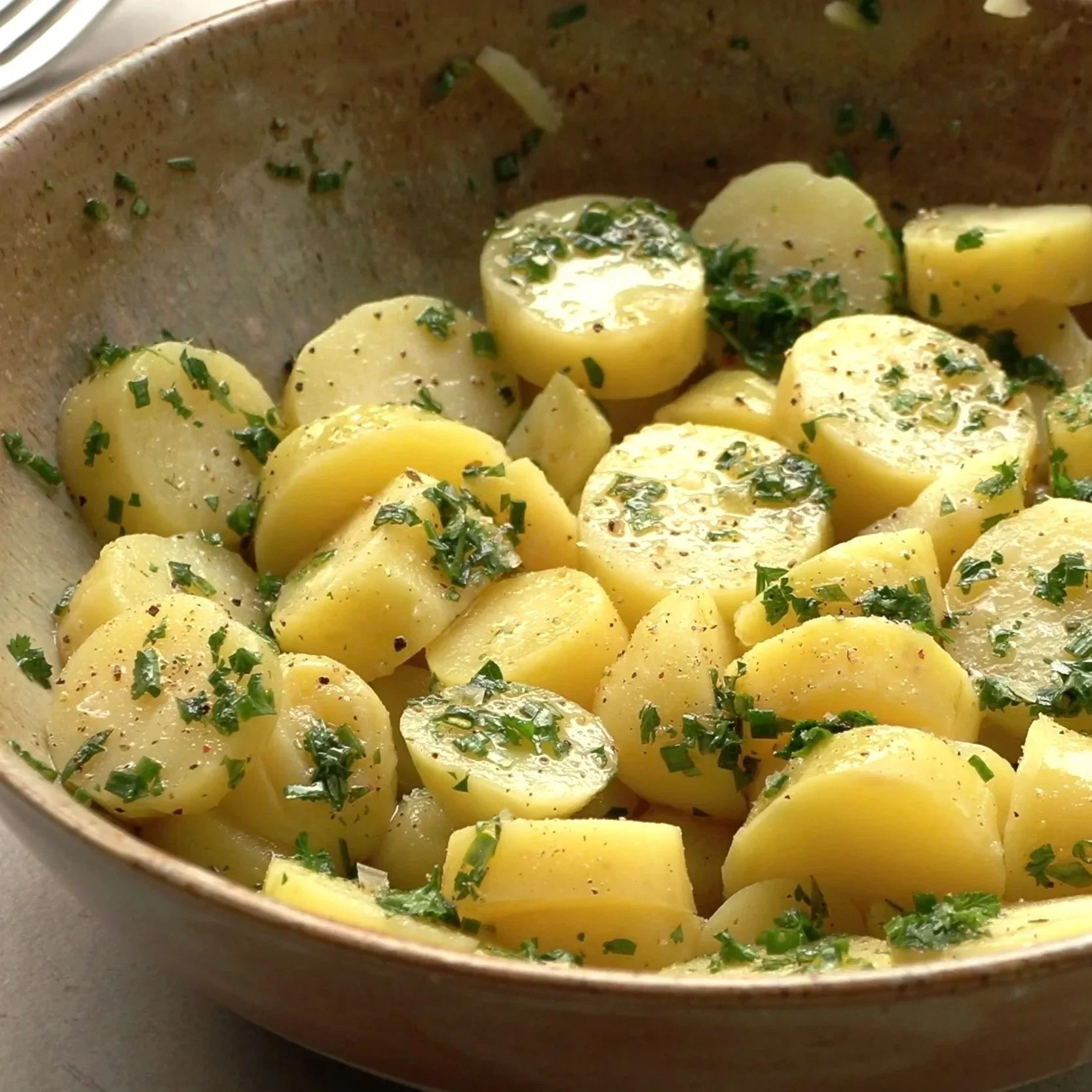
If you feel like potato salads often miss the mark, it typically comes down to one thing: the potatoes themselves have little to no flavour. And the truth is that the dressing, the garnishes, the herbs can help but none of that can fix the bland taste of a potato. The only way to fix this is tackle the problem at the source.
In this recipe I am sharing a simple technique that comes from the famous french chef Auguste Escoffier, dating back from the early 1900s, and focuses on the simple steps that is all about getting the right texture and infuse flavor in the potatoes themselves.
You can use this recipe as the first building block for you next potato salad. And from here, you can add whatever you like, mayonnaise, extra garnishes, your own personal touch. But get this foundation right, and the rest takes will take care of itself.
INGREDIENTS
500 g (1 lb) ratte potatoes / fingerling / kipfler potatoes
1 tsp coarse salt, for the cooking water
100 ml dry white wine, such as a Sauvignon Blanc from the Loire Valley
4 tbsp (60 ml) extra virgin olive oil
1 tbsp (15 ml) white wine vinegar
Salt and pepper to season
2 tsp fresh chives, finely sliced
2 tsp fresh flat-leaf parsley or chervil, finely chopped
2 tsp fresh tarragon leaves, finely chopped
MISE EN PLACE
Choose potatoes that are roughly the same size so they cook evenly. Ratte potatoes are the classic French choice for potato salad, known for their firm texture and a delicate nuttiness that works beautifully here. Any other good waxy variety is a fine substitute. But do not use starchy potatoes meant for mash; they will fall apart and are ill suite for salads
You will need a large bowl for marinating and dressing the potatoes. Have your herbs washed and ready to chop once the potatoes go into the wine.
The wine must either at room temperature or luke warm. If it was in the fridge, warm the wine very briefly in a small pan taking care not to boil it.
METHOD
Place the whole, unpeeled potatoes in a large saucepan and cover with cold water. Add the coarse salt and bring to the boil. Once boiling, cook for 15 to 20 minutes depending on size, until a knife slides in with almost no resistance the potatoes are cooked. Drain the potatoes.
Rinse briefly under cold water, just long enough that you can handle them, then peel them straight away while they are still warm. The skins will come away easily with a small knife. Do not let them cool completely before peeling; the warmth is crucial for what comes next.
Delicately slice or dice the peeled potatoes and transfer them to a large bowl. Pour the white wine over the warm potatoes and turn them gently to coat. Leave to marinate for 10 to 15 minutes, the potatoes will absorb the wine as they cool.
While the potatoes marinate, prepare your dressing. In a small bowl, whisk together the olive oil and white wine vinegar with a good pinch of salt and pepper. Add the chopped herbs and stir to combine.
Tip away any excess of remaining wine from the potatoes, then pour the dressing over and turn the potatoes gently to coat. Taste and adjust the seasoning, then leave to rest for a further 10 to 15 minutes. This resting time allows the flavours to settle and come together.
You can either try the potatoes as they are to see how good potatoes taste with a minimum amount of dressing or use them as a building block to craft your favorite potato salad. If it’s the latter, make sure you use a slotted spoon to transfer the potatoes into a clean bowl to avoid having too much dressing.
NOTE
The wine leaves no alcoholic taste behind, only a subtle fruitiness that sits in the potato itself. A Sauvignon Blanc from the Loire Valley is ideal, but any dry, unoaked French white wine will work well.
As mentioned, this recipe can be used as the base for a full potato salad (finished with a spoonful of good mayonnaise, a few cornichons, or any garnish you like) or can be served as it is. The potatoes already have everything they need in terms of flavour so you cannot go wrong from there.