
SAUCE TOMATE
The Escoffier classic tomato sauce; delicious and versatile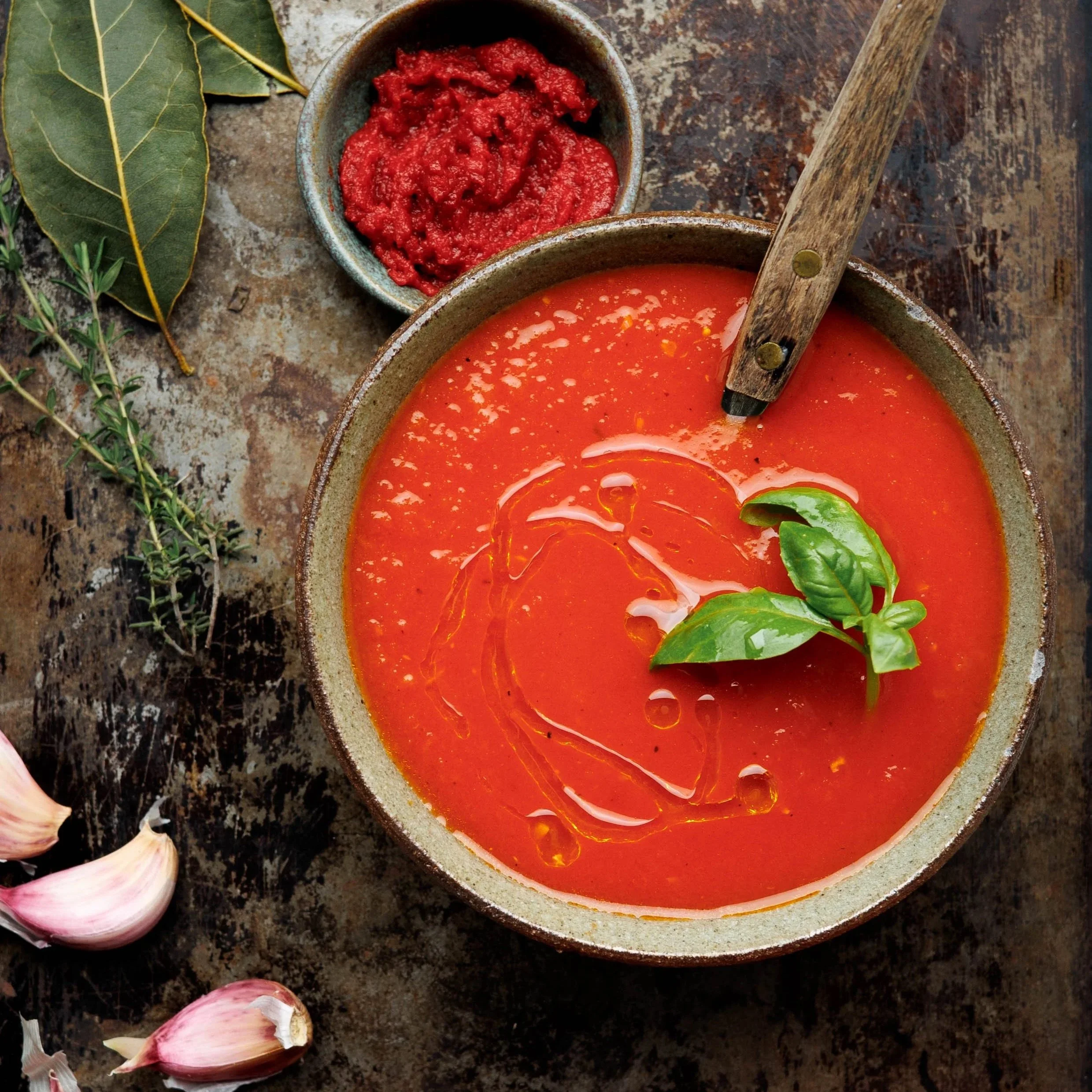
Tomato sauce has had a bit of a rebrand over the last fifty years. Since nouvelle cuisine came along, the version most French kitchens now use is the light, fresh style you'll find in our Garden-Fresh Tomato Sauce, built on ripe tomatoes and not much else. But before that shift, French cooks made tomato sauce a completely different way, and it's one of Escoffier's five mother sauces for a reason. This older sauce tomate starts as a roux tomate, a tomato-flavoured roux enriched with bacon, carrot and onion, then loosened with stock to become something closer to a velouté before the tomatoes go in. The result has more body, less acidity, and a savoury depth that the modern version doesn't chase. I think it's worth bringing back. Once you have a pot of this on hand, you'll find a use for it everywhere, spooned under a fried egg, blitzed into a soup, or stirred through white beans for a version of Escoffier's haricots à l'américaine.
Makes about 750 ml
INGREDIENTS
30 g unsalted butter
50 g smoked bacon, cut into small lardons
50 g onion, finely diced
50 g carrot, finely diced
1 cloves garlic, bruised
20 g plain flour
30 g tomato purée
500 ml chicken stock, ideally homemade
400 g tinned whole peeled tomatoes, San Marzano if you can get them
3 sprigs thyme
1 bay leaf
1 tsp white sugar
Salt and freshly ground black pepper to season
MISE EN PLACE
If you have time, make the White Chicken Stock (page xx) in advance. A good stock makes a real difference here, though a good quality store-bought one will still get you a fine result.
You'll need a fine-mesh sieve or a food mill for straining the finished sauce, and either a heavy-based saucepan or a conical sauté pan for the cooking.
METHOD
Melt the butter over a medium heat in a heavy-based saucepan. Add the bacon and let it cook gently for a minute or so, just to render a little fat. You're not trying to colour it at this stage. Add the onion, carrot and garlic and cook for another two minutes, stirring so everything softens without taking on much colour.
Reduce the heat to low and sprinkle in the flour, stirring to coat the bacon and vegetables. This is your roux tomaté. Cook it gently for about three minutes, stirring from time to time, until it turns a pale, blond colour. Don't rush this stage or add the tomato purée too early, or you'll lose the colour cue you need to judge it by.
Stir in the tomato purée and cook for a further minute over low heat. Now raise the heat slightly and add the stock a little at a time, whisking as you go. What you're making at this point is technically a velouté, roux plus stock, before the tomato flavour builds on top of it. Bring it to a light boil.
Add the tinned tomatoes, thyme, bay leaf, sugar, and a pinch of salt and pepper. Give everything a stir, then reduce to a bare simmer. Part-cover the pan and leave it to cook gently for around 40 minutes, stirring occasionally so nothing catches on the bottom.
Alternatively, you can cook the sauce in the oven at 160°C (320°F) for 30 minutes, which gives a slightly rounder flavour if you prefer that.
Once the sauce has reduced and thickened, pass it through a sieve or food mill into a clean bowl, pressing gently on the solids to extract the liquid. Don't press too hard, or you'll push the puréed vegetables through and cloud the texture. Taste and adjust the seasoning. Reheat to a simmer in a saucepan.
Note
This sauce keeps in the fridge for up to three days and freezes well. Here’s some ideas on how you can enjoy it: warm a spoonful under a fried egg on a buttered crouton for breakfast, thin it with a little extra stock and finish with a knob of butter for a rustic soup, or stir it through tinned white beans and crisp bacon for a version of Escoffier's haricots à l'américaine.
Variation
For a rustic, unstrained version suited to soup, skip the straining step. Fish out the thyme and bay leaf, then blend the sauce with the bacon and vegetables still in it for a thicker, farmhouse-style result.