
FAMILY-SIZE CRÈME CARAMEL
This classic is all about texture: that delicate, silky custard trembling under a glossy layer of amber caramel. 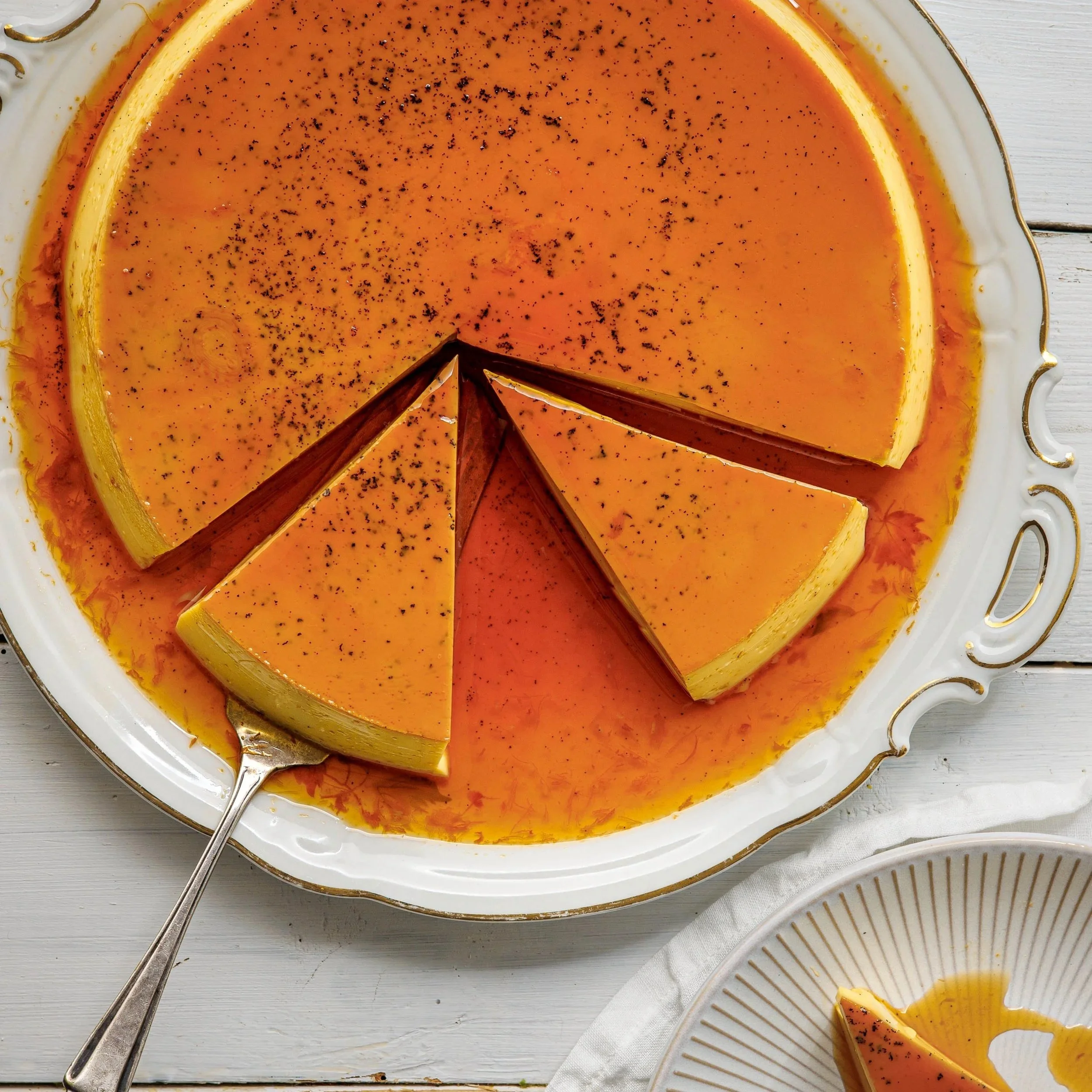
There are very few desserts that have travelled as well as crème caramel. Just about every cuisine in the world has fashioned its own version, and for good reason - it is one of those rare things that is both simple to make and impossible not to love. In France, it is all about texture: that delicate, silky custard trembling under a glossy layer of amber caramel. This family-sized version is made to share, and once you have flipped it onto the plate and watched the caramel pour down the sides, you will understand why it never gets old.

INGREDIENTS
Serves: 6-8
For the caramel
100 g (½ cup) caster sugar
45 ml (3 tbsp) water
For the custard
750 ml (3 cups + 3 tbsp) whole milk
1 fresh vanilla bean, split lengthwise with seeds scraped
5 large eggs
4 large egg yolks
150 g (¾ cup) caster sugar
MISE EN PLACE
This recipe uses the bain-marie method. You will need a round cake tin at least 24 cm (9½ in) in diameter and 5 cm (2 in) deep, and a large baking dish with high sides to hold the water bath.
A kitchen thermometer is strongly recommended for the caramel — it takes the guesswork out and prevents burning.
Preheat the oven to 150°C (300°F).
Method
Begin with the caramel. In a small saucepan, combine the sugar and water over medium heat, stirring until the sugar dissolves. Once dissolved, stop stirring and do not move the pan.
When the mixture begins to bubble, increase the heat to high and cook until the caramel reaches 180°C (350°F) on a kitchen thermometer — this takes around 8 to 10 minutes. As the temperature approaches 180°C (350°F), the caramel will turn a deep amber colour. Swirl the pan gently to even out the colour. As soon as the caramel becomes liquid and begins to smoke, pour it immediately into the cake tin, swirling to coat the base evenly. Set aside.
To make the custard, pour the milk into a large saucepan and add the vanilla bean and seeds. Bring to a gentle simmer over medium heat.
Meanwhile, crack the whole eggs into a large bowl, add the egg yolks and sugar, and whisk gently for about 3 minutes until most of the sugar has dissolved.
As soon as the milk begins to simmer, remove from the heat and strain half of it through a fine-mesh sieve over the egg mixture. Stir gently, then add the remaining milk and give everything a final stir. Skim away any foam from the surface.
Pour the custard into the caramel-lined tin, then place the tin inside the baking dish. Pour boiling water into the baking dish until it comes a third of the way up the side of the tin, taking care not to splash any into the custard. Carefully transfer to the middle rack of the oven and bake for 35 minutes.
Once cooked, lift the tin out of the baking dish and allow to cool on a rack before transferring to the fridge. The crème caramel needs at least 12 hours of chilling — this is not optional. It is during this time that the caramel liquefies into the silky sauce that makes the whole dessert.
To turn out, run a knife around the edges of the tin. Place a large flat plate over the top and flip quickly and confidently. Lift away the tin and let the caramel flow down over the sides.
Variation
For a sturdier crème caramel that is easier to turn out, use 6 whole eggs and 3 yolks. For the most delicate, creamy version, use 4 whole eggs and 5 yolks.