
FLAMBÉED APPLE TART WITH CALVADOS
The easiest tart,No bakeware required, 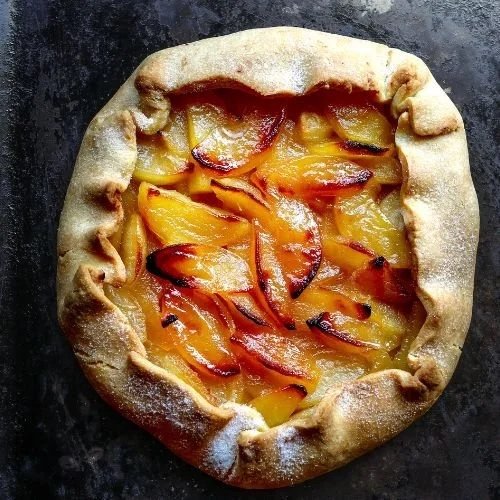
This tart is one of those recipes that makes you think you've seen it all and then it surprises you completely. It comes from the Pays d'Auge, one of Normandy's most celebrated apple-growing regions and the birthplace of Calvados, the famous apple brandy used both as a digestif and, in this case, a flambéing agent halfway through baking. No tart tin, no flan ring, just a rolled shortcrust folded up around a pan-glazed apple filling, set alight with Calvados, and baked until golden. Yes, you read that correctly. I'm not entirely sure at what point in culinary history someone decided this was a logical step, but I'm glad they did, because the result is quietly spectacular. The Calvados infuses the apples with a deep, boozy warmth that you simply cannot get any other way. Serve with a good crème fraîche from Normandy if you can find it, or vanilla ice cream if you can't.
INGREDIENTS
Serves 6
1 batch shortcrust see recipe here
Apple Filling
Juice of 1 large lemon
5 large apples (such as Golden Delicious or Braeburn), cored, peeled and thickly sliced
60g (2¼ oz) caster sugar
1 to 2 tbsp caster sugar for the flambé
50g (1¾ oz) unsalted butter
50 ml (3½ tbsp) Calvados
MISE EN PLACE
Make or buy your shortcrust pastry in advance and rest it in the fridge for at least 30 minutes. If using homemade, remove it from the fridge 10–15 minutes before rolling so it's pliable and doesn't crack at the edges.
Preheat the oven to 190°C (375°F). Line a large flat baking sheet (no tart pan needed here).
Place the lemon juice in a large bowl. As you core and peel each apple, slice them thickly and toss them immediately in the lemon juice to prevent browning. Once all the apples are in the bowl, sprinkle over the sugar and gently turn everything together - you want the slices coated, not broken.
Method
In a large frying pan, melt the butter over medium heat. Using a slotted spoon or spatula, lift the apple slices into the pan, leaving the excess lemon juice behind. Too much liquid at this stage and the apples will steam rather than colour. Cook for around 8 minutes, turning occasionally, until the juices have reduced, the apples are lightly glazed and there is no liquid left in the pan. You are not caramelising, just glazing. Remove from the heat and set aside to cool to room temperature.
On a lightly floured surface, roll the shortcrust into a rough circle about 30 cm (12 inches) in diameter, rustic is the point here, so don't fuss too much over the shape. Roll the pastry loosely onto your rolling pin and transfer it to the prepared baking sheet. If it lands slightly off-centre, place the whole tray in the freezer for a few minutes until the pastry firms up, then carefully lift and reposition it. This little trick saves a lot of frustration.
Arrange the cooled apples in the centre of the pastry, leaving a border of about 3.5 cm (1½ inches) all around. Fold the edges of the pastry up and over the apples, pressing gently as you go to create a rough, enclosed border.
Transfer to the oven and bake for 15–20 minutes, until the pastry is set and beginning to colour.
After 20 minutes take the tart out of the oven then gently warm the Calvados in a small saucepan over low heat - do not boil it. You want it warm enough to ignite easily. carefully light the Calvados in the pan with a long match or lighter. Once it is gently flaming, pour it directly over the apples and return the tart immediately to the oven. Bake for a further 15–20 minutes until the pastry is golden and the apples are cooked through.
Remove from the oven and allow the tart to cool and settle for at least 20 minutes before cutting. It slices best when just warm rather than hot. Serve with crème fraîche or ice cream.
Tip
The flambé works best when the Calvados is warm but not boiling. Heated too far and the alcohol burns off before you can light it. If the flame seems weak or doesn't take, the Calvados is likely too cool or too reduced. Pour the flaming liquid over the apples only, not the pastry edges, to avoid scorching the crust.