
RUSTIC BRAISED FENNEL
Adelicate anise flavour that plays beautifully against the richness of pork.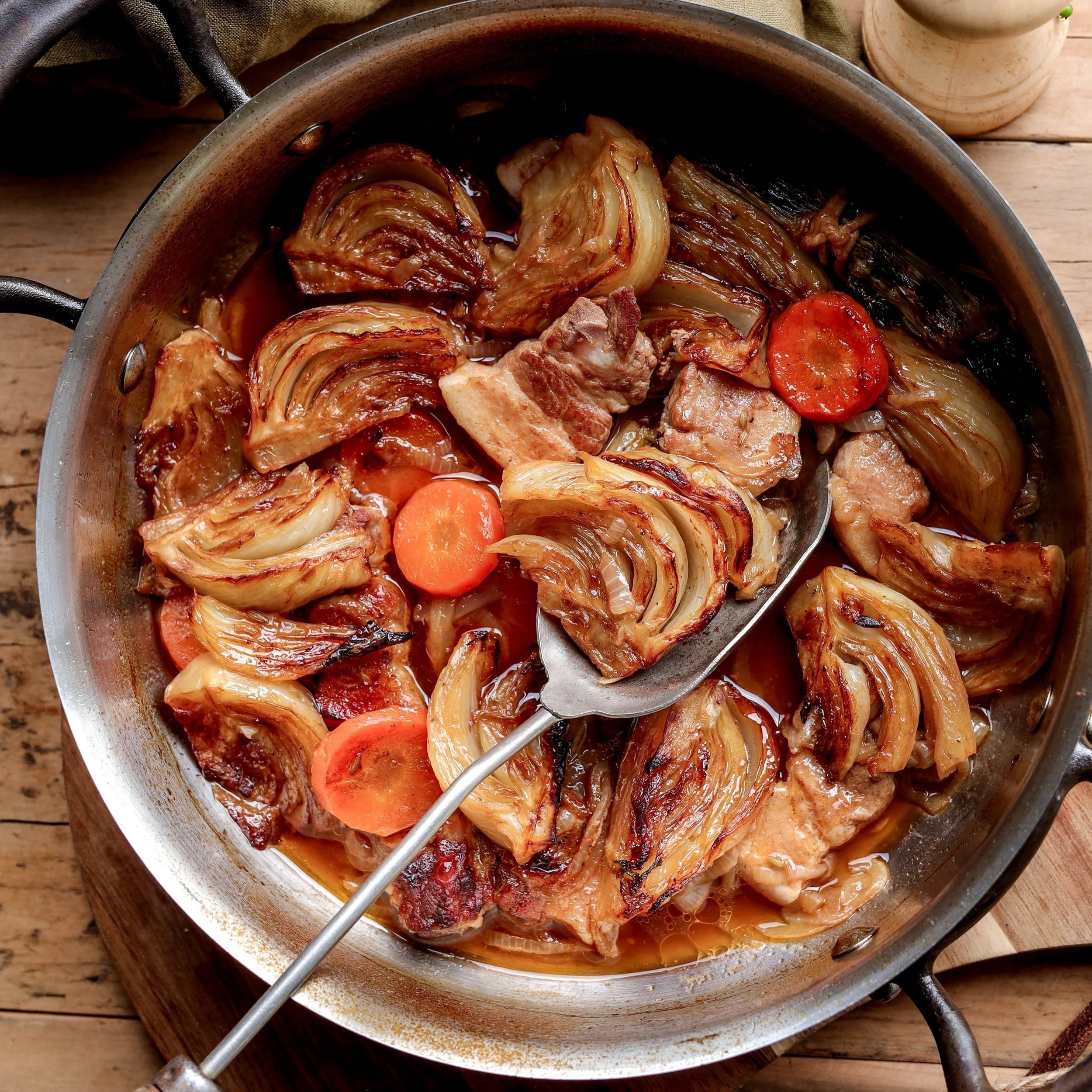
Fennel is one of those vegetables that most home cooks walk past without a second thought, which is a real shame because it is one of the most versatile and rewarding things you can braise. This recipe comes from the north of France, where the tradition of cooking vegetables au gras, meaning in fat, gives dishes a richness and depth you just don't get any other way. The idea is simple: a fatty stock, some pork belly, a good aromatic base, and patience. What comes out of the oven is soft, moist, and full of that delicate anise flavour that plays beautifully against the richness of the pork.
Serve this alongside a roast pork, a simple roast chicken, or other meats. In my experience, pork and fennel is one of the great combinations in French home cooking. Try it once and you will understand why.
INGREDIENTS
Serves 4
3 fennel bulbs, stalks removed, outer leaves discarded, quartered
200 g (7 oz) pork belly, cut into large cubes
1 onion, peeled and sliced
1 carrot, peeled and sliced
2 tbsp (30 ml) olive oil
250 ml (8½ fl oz) beef stock, ideally a homemade stock
1 bouquet garni (a piece of leek wrapped around a stick of celery, a sprig of parsley, a sprig of thyme, and a bay leaf, tied with kitchen twine)
A pinch or two of fennel seeds (optional)
Salt and freshly ground pepper
MISE EN PLACE
You will need a wide, shallow braising pan or rondeau with a lid, large enough to hold the fennel quarters in a single layer. A cast-iron casserole dish will also work well.
Preheat the oven to 200°C (400°F).
Method
Bring a large pot of salted water to the boil for blanching the fennel. Have a tray lined with a kitchen towel ready to drain the fennel after blanching.
To prepare the fennel, cut away the stalks close to where they meet the bulb, keeping as much of the bulb intact as possible. Remove any outer leaves that look damaged or discoloured. Halve each bulb through the root, then cut each half into quarters. The root end will hold each quarter together during cooking, so try not to cut through it.
When done, plunge the fennel quarters gently into the boiling salted water and blanch for 5 minutes. This step softens the exterior, removes some of the bitterness and tempers the anise flavour before the braise. When done, remove the fennel carefully with a slotted spoon and lay it flat on the lined tray to drain.
In the braising pan, heat the olive oil over medium-high heat. Working in batches and using a flat spatula, place the fennel quarters cut-side down and colour them for 3 to 4 minutes on each side until you have a good golden brown on the surface. A well-coloured fennel will give the finished dish more character. Transfer the seared fennel to a separate tray and set aside.
In the same pan, add the pork belly cubes and cook over medium heat for 2 to 3 minutes until lightly coloured. Add the sliced onion and carrot and cook for a further 2 to 3 minutes, just enough to release their flavour and begin to soften. This combination of pork, onion, and carrot forms the aromatic base on which the fennel will braise.
Reduce the heat and arrange the seared fennel quarters on top of the garnish in a single layer. Season with salt, pepper, and the pinch of fennel seeds if using. Pour in the stock then bring to a simmer over medium heat. Finally tuck in the bouquet garni, place the lid on, and transfer to the oven.
Braise for 40 minutes, checking the level of liquid once during cooking. If the pan looks dry, add a small splash of stock or water and cook for a further 5 minutes without the lid to crisp up the edges of the fennel. By the end of the cooking time, you want the liquid to have reduced to a thin jus at the base of the pan, just enough to spoon over the fennel when serving.
When the fennel is done, it should be completely tender and yield without resistance to the tip of a knife. If there is too much liquid remaining when you remove the lid, return the pan to a medium heat on the stovetop for a few minutes with the lid off to reduce. Serve the fennel quarters alongside your chosen main, spooning the pan juices and a few pieces of pork belly over the top.
NOTE
The quality of your stock will have a direct impact on the flavour of this dish. In France, the term au gras refers specifically to cooking in a rich, fatty stock where the fat has not been skimmed. If you have a homemade brown stock or the fat-rich cooking liquid from a previous braise, this is the moment to use it. A store-bought stock will work no problem but make sure you get a good quality one, otherwise it will lack in flavor.
The fennel stalks and outer leaves you trim away are not waste. Freeze them and use them to flavour stocks, stuff the cavity of a whole fish before roasting, or add to a court-bouillon for poaching.